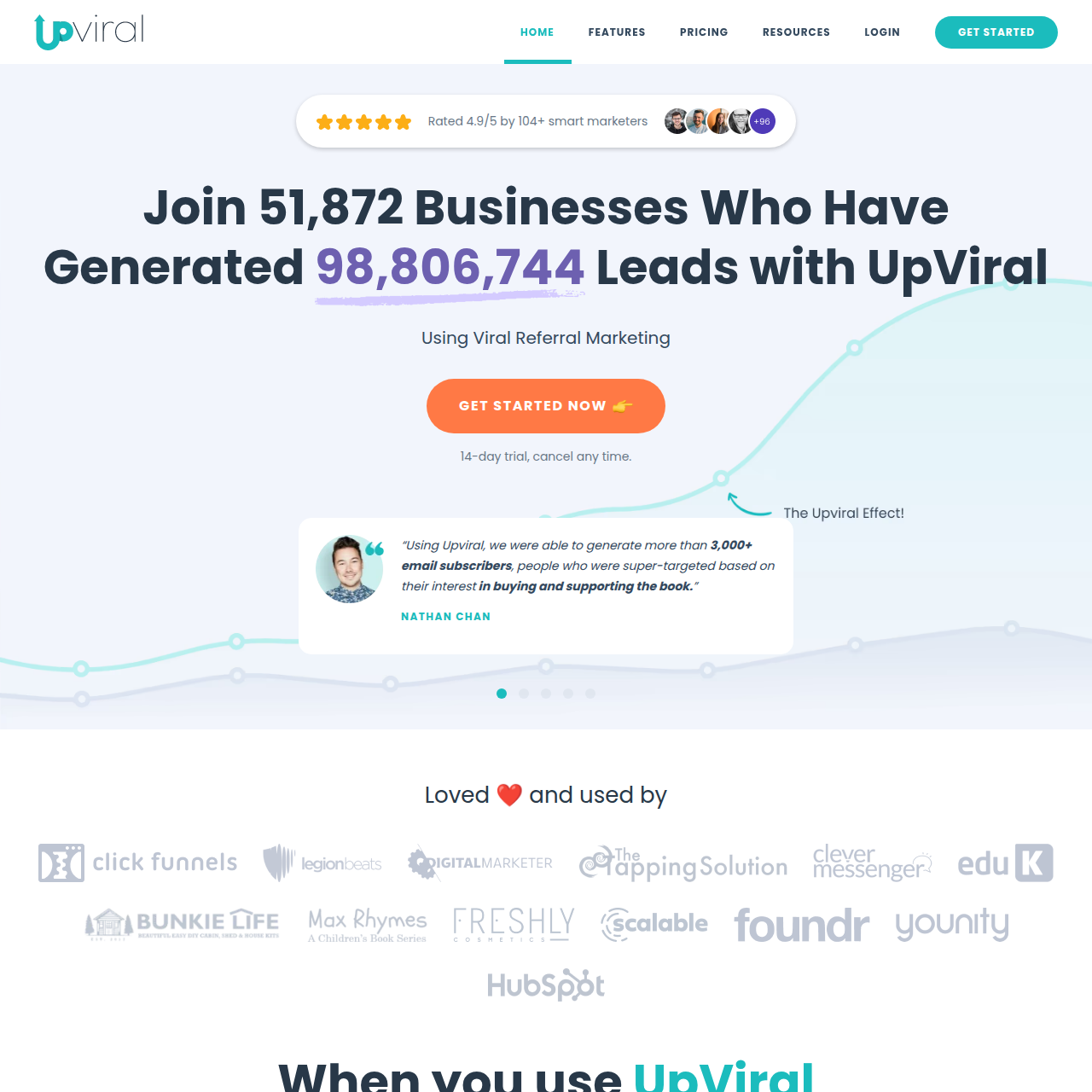
If you've been searching for an honest UpViral review before handing over your credit card, you're in the right place. I've used UpViral across multiple digital product launches, and what follows is a ground-level look at what it actually does, where it shines, and who probably shouldn't bother.
What is UpViral and how does it work?
UpViral is a referral marketing platform built around one core idea: your existing leads recruit new ones for you. You set up a campaign, offer an incentive, and give every person who signs up a unique referral link. When they share that link and their friends sign up, they earn points, entries, or rewards. The loop keeps turning, and your list grows without you manually hunting for every new subscriber.
The mechanics are simple. Someone lands on your campaign page, enters their email, and gets a personal referral link. You decide what they earn for sharing. More shares equal more entries into a giveaway, early access to a product, or a milestone reward like a free download. The platform tracks every referral automatically, so you're not running spreadsheets at midnight trying to figure out who referred who.
According to UpViral's own numbers, over 32,600 businesses have generated more than 72 million leads through the platform. That's a number worth pausing on, even with healthy skepticism. No single platform deserves full credit for every lead a business generates, but the volume does suggest the model works for a wide range of operators.
My personal experience using UpViral for digital product launches
I've run UpViral campaigns with every new digital product launch for the past couple of years. The specific thing I keep coming back to is this: the leads I collect through UpViral campaigns consistently convert at one to two percent higher than leads I pull from other sources. That's not a massive headline number, but across a launch sequence with a few thousand people on the list, it adds up to real revenue.
My working theory is that referral-sourced leads arrive pre-warmed. They heard about the offer from someone they actually know, not from a cold ad. That social context carries weight when the sales emails start landing in their inbox.
The setup process is genuinely beginner-friendly. I've built campaigns in under an hour, including the landing page. UpViral has templates for sweepstakes, waitlists, milestone reward campaigns, and evergreen referral programs. You pick one, customize the copy and visuals, connect your email platform, and publish. There's no coding involved. If you can fill out a form and upload an image, you can run an UpViral campaign.
Try UpViral with a free trial here
What campaign types can you run with UpViral?
This is where UpViral has more range than it looks like from the outside. The platform isn't just for giveaways. Here's what you can actually build:
- Sweepstakes and contests: Classic point-based giveaway where entrants compete for a grand prize. Good for building a list fast around a specific topic or product category.
- Milestone rewards: Subscribers unlock rewards at specific referral thresholds. Refer three friends and get a free PDF. Refer ten and get early beta access. This works well for software and course launches.
- Viral waitlists: Build pre-launch hype by putting people on a waiting list with a leaderboard. People move up the list by referring others. This is the same mechanic that made early Robinhood and Superhuman launches famous.
- Evergreen referral campaigns: Not tied to a specific launch window. Runs continuously and adds leads to your newsletter or community on autopilot.
- Event and webinar fills: Incentivize registrants to bring friends to your workshop, masterclass, or live event.
- Review campaigns: Encourage customers to leave testimonials or record video reviews in exchange for a reward.
The mix-and-match campaign builder lets you combine elements across these types, which gives you more flexibility than most competing tools in this price range. For a solo operator running multiple offers throughout the year, having one platform that covers all these use cases matters. It keeps your tech stack lean.
Is UpViral easy to set up for beginners?
Honestly, yes. And I don't say that lightly because "easy" is one of the most overused words in software marketing.
The campaign builder is template-driven. You pick a campaign type, choose a visual template (including seasonal ones for Halloween, Christmas, Father's Day, and others), and fill in your details. The landing page editor is drag-and-drop. You can embed UpViral's opt-in form on an existing page, run it as a pop-up, or use UpViral's hosted page. The platform connects to most major email service providers, so your new leads flow directly into whatever you're already using.
One thing I appreciate is that the referral tracking is automatic. Every person who signs up gets a unique link generated for them. You don't configure this. It just happens. The dashboard shows you who referred who, how many referrals each person made, and which campaigns are producing the best results.
If you get stuck, UpViral has live chat support staffed by actual humans, not bots. I've used it. Response time was fast, and the person on the other end actually understood the platform. That's not a given with SaaS tools at this price point.
UpViral pricing: is it worth the cost?
UpViral's pricing is low enough that it's almost not worth overthinking. The platform currently offers plans starting at $1 for a trial period, with yearly subscription discounts available. For a lead generation tool that can directly build your email list, the cost-per-lead math tends to work in your favor quickly.
Compare that to running paid ads. A modest Facebook or Google campaign targeting a specific niche audience might cost you $3 to $8 per lead depending on your market. If UpViral helps you generate 500 leads through referral mechanics and you only paid for the initial 100 from ads, you've effectively cut your cost per lead by 80 percent. That math is why tools like this exist.
The free trial means you can test a real campaign before committing to an annual plan. Run one launch. See what the referral rate looks like. If the numbers make sense, upgrade. If they don't, you've spent almost nothing to find out.
See current UpViral pricing and start your trial
Who is UpViral actually a good fit for?
UpViral works best when there's a clear incentive to share and an audience that's socially connected around a shared interest. That means it tends to perform well for:
- Entrepreneurs launching digital products, courses, or memberships
- Podcast hosts growing their listener base
- Newsletter operators adding subscribers
- Online community builders
- Small e-commerce brands running seasonal promotions
- Event organizers filling seats for webinars, workshops, or masterclasses
One real example from UpViral's own case studies: Michael Cooch used the platform to build a 30,000-person email list in a new market in under six months. Another user, Marloes Collins, ran a campaign in the Netherlands that generated 43,870 leads and 135,554 visitors. Those aren't typical results, but they're not fabricated either. They reflect what's possible when you have a compelling offer and an audience motivated to share.
Nathan Chan used UpViral to generate over 3,000 targeted email subscribers for a book launch. The key word there is "targeted." The referral model tends to attract people who are genuinely interested in the topic, because they're coming in through someone they trust who shares that interest.
Who should probably skip UpViral?
This is worth being direct about. UpViral is NOT the right tool for every business.
If you're in a regulated industry like insurance, medical services, or legal services, sweepstakes and referral giveaways may conflict with your compliance requirements. Check with a lawyer before running any incentive-based campaign in those fields.
Very local businesses with a small geographic radius also tend to see limited results. A referral campaign for a single-location dry cleaner or dentist office might generate some buzz locally, but the viral mechanics work better when your audience is spread across a larger network and your offer is accessible online.
High-ticket luxury offers are another awkward fit. If you're selling $50,000 real estate investments or ultra-premium travel packages to high-net-worth individuals, the gamification angle tends to feel off-brand. That audience often has privacy concerns about sharing personal referral links, and the contest-and-reward model doesn't match how they make buying decisions.
And low-ticket local service offers, think $25 haircuts or neighborhood lawn care, probably won't see enough return on the setup time to justify it.
How does UpViral compare to running a standard opt-in page?
A standard opt-in page collects leads one at a time. Someone sees your ad or finds your content, clicks through, and signs up. That's the end of the transaction. UpViral turns each of those signups into a potential recruiter. One lead becomes two, two become four, and so on, assuming your incentive is good enough to motivate sharing.
The difference in list growth speed can be significant. A standard opt-in campaign might convert at 30 to 40 percent of traffic and stop there. A well-structured UpViral campaign can generate 30 to 50 percent additional leads on top of your original traffic through referrals alone, according to benchmarks shared by UpViral users. Your actual results depend on your niche, your offer, and how motivated your audience is to share.
The other difference is lead quality. Referral leads, as I mentioned from my own experience, tend to convert better. They arrive with context. They know what they signed up for because someone they trust told them about it.
UpViral features worth knowing about
A few specific features that aren't obvious from the homepage but matter in practice:
- Automated email triggers: You can set up automated follow-up emails based on referral milestones. Someone hits five referrals and automatically gets a reward email. This runs without you touching it.
- Fraud detection: UpViral has built-in mechanisms to catch fake referrals. People trying to game the system by creating fake accounts get flagged. This matters if you're running a high-stakes giveaway.
- Embed options: You're not locked into UpViral's hosted pages. You can embed the opt-in form on your own landing page, show it as a pop-up, or use a widget. This is useful if you want consistent branding across your site.
- Social sharing buttons: The platform auto-generates sharing buttons for the social networks you choose. You control which platforms your audience can share to.
- Referral tracking dashboard: You can see exactly how many referrals each subscriber has made, which lets you identify your top advocates and reward them specifically.
Frequently asked questions about UpViral
Does UpViral work with my email marketing platform?
UpViral integrates with most major email service providers including ActiveCampaign, Mailchimp, ConvertKit, GetResponse, and others. New leads can flow directly into your existing lists and sequences. You connect your ESP during campaign setup, and it works automatically from there.
Can I use UpViral without running a giveaway?
Yes. Giveaways are one option, but UpViral also supports waitlists, milestone reward campaigns, evergreen referral programs, and event fills. If you don't want to give away a prize, you can offer early access, a free resource, or a position upgrade on a waitlist instead.
How long does it take to set up an UpViral campaign?
A basic campaign using one of the existing templates can be live in under an hour. More customized campaigns with embedded forms, branded landing pages, and connected email sequences might take two to three hours the first time. After your first campaign, setup gets faster because you know the workflow.
Is there a free trial for UpViral?
Yes, UpViral currently offers a free trial so you can test the platform with a real campaign before committing to a paid plan. Yearly subscriptions also come with a discount compared to monthly billing.
What kind of incentive works best for UpViral campaigns?
Incentives that are closely tied to what your audience already wants tend to outperform generic prizes. A $500 Amazon gift card attracts everyone, including people who will never buy from you. A free course, exclusive content, or early product access attracts people who are actually interested in your offer. In my experience, niche-specific rewards produce better lead quality even if they generate fewer total entries.
Does UpViral work for B2B businesses?
It can, but it depends on the offer and the audience. B2B referral campaigns work best when the incentive is professional in nature, like a free audit, a tool license, or a premium resource relevant to their work. The more consumer-facing the incentive feels, the less it resonates with a business audience. B2B campaigns also tend to grow more slowly because professional networks share less casually than personal ones.
Start your UpViral free trial and build your first campaign
Final verdict: is UpViral worth it?
For the right use case, yes. If you're launching a digital product, building a newsletter, growing an online community, or filling seats for an event, UpViral gives you a legitimate mechanism to multiply the leads you're already generating. The referral loop works. The setup is manageable even if you're not technical. And the leads it produces tend to convert better than cold traffic.
The platform isn't magic. You still need an offer worth sharing and an initial audience to seed the campaign. But given the pricing, the template library, and the automated referral tracking, it's one of the more efficient tools available for solo operators who want list growth without a paid ads budget that scales forever.
Here's what I'd suggest as your next move. First, identify one upcoming launch, event, or list-building push where a referral incentive would make sense. Second, sign up for the free trial and build that campaign using one of UpViral's existing templates. Third, track your referral rate after the first two weeks. If more than 20 percent of your signups came from referrals, the tool is earning its place in your stack.
If you're still on the fence, the trial removes most of the risk. You'll know within one campaign whether it fits how you work.